On 7 November 1900, a small band of Dragoons turned to face an overwhelming Boer force — and earned Canada’s highest military honour three times over.
The kopjes of the South African highveld don’t look like much. Low, rocky hills scattered across an open plain — the kind of terrain that seems to offer no cover, no advantage, no reason to make a stand.
On the morning of November 7, 1900, the Royal Canadian Dragoons made their stand there anyway.
The RCD was part of a British column withdrawing across the farm at Leliefontein, deep in what is now Mpumalanga province. Boer commandos had been pressing the column for days. The artillery attached to the Dragoons — two seven-pounder guns — was gallantly delaying the advance but were falling behind, the horses were exhausted from the continuous action and the Boers continued to close fast.
If the guns were captured, it would be a significant defeat. Someone had to buy time.
The Dragoons turned back.
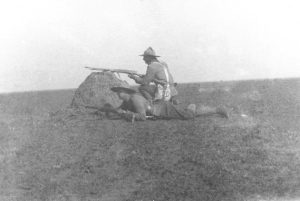
What followed was a fighting rearguard action against a Boer force that outnumbered the Canadians many times over. Small groups of Dragoons dismounted under fire, held positions long enough for the guns to move, then fell back and did it again. The Boers pressed relentlessly. The ground offered almost no cover. Casualties mounted.
Three men that day refused to leave a man or a gun behind — and their actions became the stuff of Regimental legend.
Lieutenant Hampden Cockburn twice rallied his men and held exposed ground under heavy fire to keep the Boers off the guns.
Lieutenant Richard Turner rode back under fire to assist his comrades and held the Boers at bay at critical moments during the withdrawal.
Sergeant Edward Holland — the man whose name a Royal Canadian Dragoons Army Cadet Corps still carries today — covered the withdrawal of the guns under direct fire, staying in the open long after others had pulled back with his Colt machine gun.
Each was awarded the Victoria Cross.
Three Victoria Crosses. One regiment. One day. It remains one of the most decorated single actions in Canadian military history.
The Regimental guidon bears the battle honour “SOUTH AFRICA 1899–1900.” But Leliefontein is more than a name on a flag. It is a demonstration of what the Regiment means when it speaks of duty, of looking after one another, and of refusing to leave without the person beside you.
One hundred and twenty-six years later, the Royal Canadian Dragoons still answer the call. The names Cockburn, Turner, and Holland remind every Dragoon — and every cadet who trains under the Springbok crest — what that call has sometimes asked.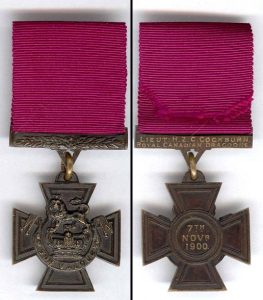


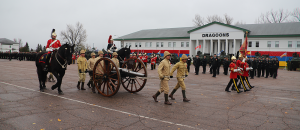
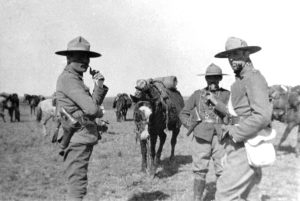

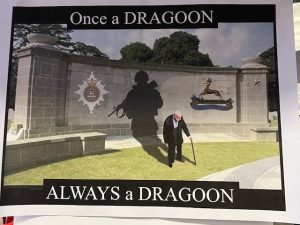
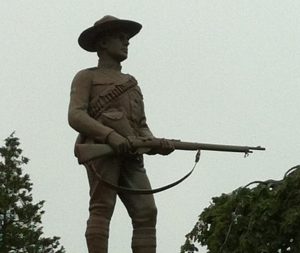
The Guild honours the memory of those who held the line at Leliefontein, and all who have carried the Dragoon tradition forward since.